Summary
Secret items, areas, quests, weapons, and characters are all but a few examples of the different kinds of secrets that game developers like to hide in their titles. However, there’s also the matter ofsecret songsas well. They could be rearrangements from older games, goofy jingles that only play after activating cheats, or songs one would hear if the player sticks around long enough to watch the credits.
These days, it’s a lot easier to keep track of such tunes thanks to the internet’s countless walkthroughs and videos that archive said music. Without them, who knows how obscure these ditties would have remained to most people?

The re-released version of the highly influential stealth-action titleMetal Gear Solidincluded an intriguing collection of additions to the base game for Japanese players and PC gamers in the West. One particular feature, however, was exclusive to Japan, and that was the inclusion of secret songs.
One, in particular, is the ‘Theme of Solid Snake,’ a track originally fromMetal Gear Solid 2: Solid Snakefor the MSX2 computer in Japan. This remixed version uses the same instruments inMetal Gear Solidand can be listened to upon entering the cavern before the battle with Vulcan Raven. Calling the frequency 140.66 on the codec will play the track in a call.

First appearing as a musical Easter egg inHalo: Combat Evolved, this secret track, titled ‘Siege of Madrigal,’ can be heard in specific spots at the beginning and end of the ‘Assault on the Control Room’ level.
It originated fromMyth: The Fallen Lords, a real-time strategy game developed by Bungle back in 1997, for which Martin O’Donnell and Michael Salvatori (composers for theHaloseries) both made music. Not only does it appear as a secret track on the game’s respective soundtrack (at the end of the final song on the album,the main menu theme ‘Halo’), but it also has appeared in nearly every mainline entry in the series as a secret song ever since.

Call of Duty: World at Warhad a money-making game mode on its hands with the inclusion of its secret unlockable Zombies survival mode. After a roaring response from excited fans, Treyarch got to work on more map packs, which included a new Zombies map in each.
‘Verruckt,’ set in an undead-infested German asylum in ruins, was home to the first-ever Easter egg song that would become a staple inclusion in future maps. Flushing the toilet located upstairs to the left thrice would play ‘Lullaby for a Dead Man’ by Kevin Sherwood and Elena Siegman aloud for all to hear. It’s actually a full-length version of the track that would play during the game-over sequence in the first Zombies map, ‘Nacht Der Untoten,’ and would be kept intact when it was carried over to future entries.

After defeating the nefarious Zilla in the cult-classic, Asian-themed first-person shooterShadow Warrior, the cowardly boss will eject and fly away, hinting at a potential return for revenge. After the end-level stats are shown, the awkwardly-named protagonist will decide to break out in song during the credits.
‘Lo Wang’s Rap’ is a very funny rap song created by the game’s composer, Lee Jackson, after the game’s publisher, GT Interactive, requested that the awkwardly-named protagonist Lo Wang should do a rap to help promote the game at E3. Since Wang’s voice actor, John William Galt, couldn’t rap, Jackson decided to fashion a song out of one-liners and outtakes from the recording sessions. The end result? A funky jam involving the hero beating the snot out of a disciple and failing to flirt with a lady.

Rogue Warrioris another title that has a secret tune that plays during its credits, which is actually (and unironically) the best thing about thiscritically panned shooter. It’s a surprise for anyone who actually found it.
With groovy keyboards, smooth acoustic guitars, and bouncing percussion, it strings together the profanity-laden one-liners of Dick Marcinko (voiced by Mickey Rourke) across a catchy, funky track, along with some of his grunting sounds when getting hurt and guns being discharged. The whole thing is great for a laugh, though one has to wonder why there are so few video games that sneak in raps made up of a character’s one-liners. Who knows, maybe this will change in the future.

Nintendo snuck in a charming surprise for those who purchased aGame & Watch: Super Mario Brosconsole. Alongside its built-in copy ofSuper Mario Bros.and aMario-themed Game & Watch title is a digital clock that offers 35 different animations.
If the player holds down the A-button when the digital clock is present, a jingle will play, called ‘Draw Mario.’ It’s a charming tune, sung in English, that basically describes how anyone can draw the iconic plumber. Initially a secret, Nintendo even confirmed its existence as part of a disclaimer at the bottom of its product page due to a slight bug regarding changing its language.
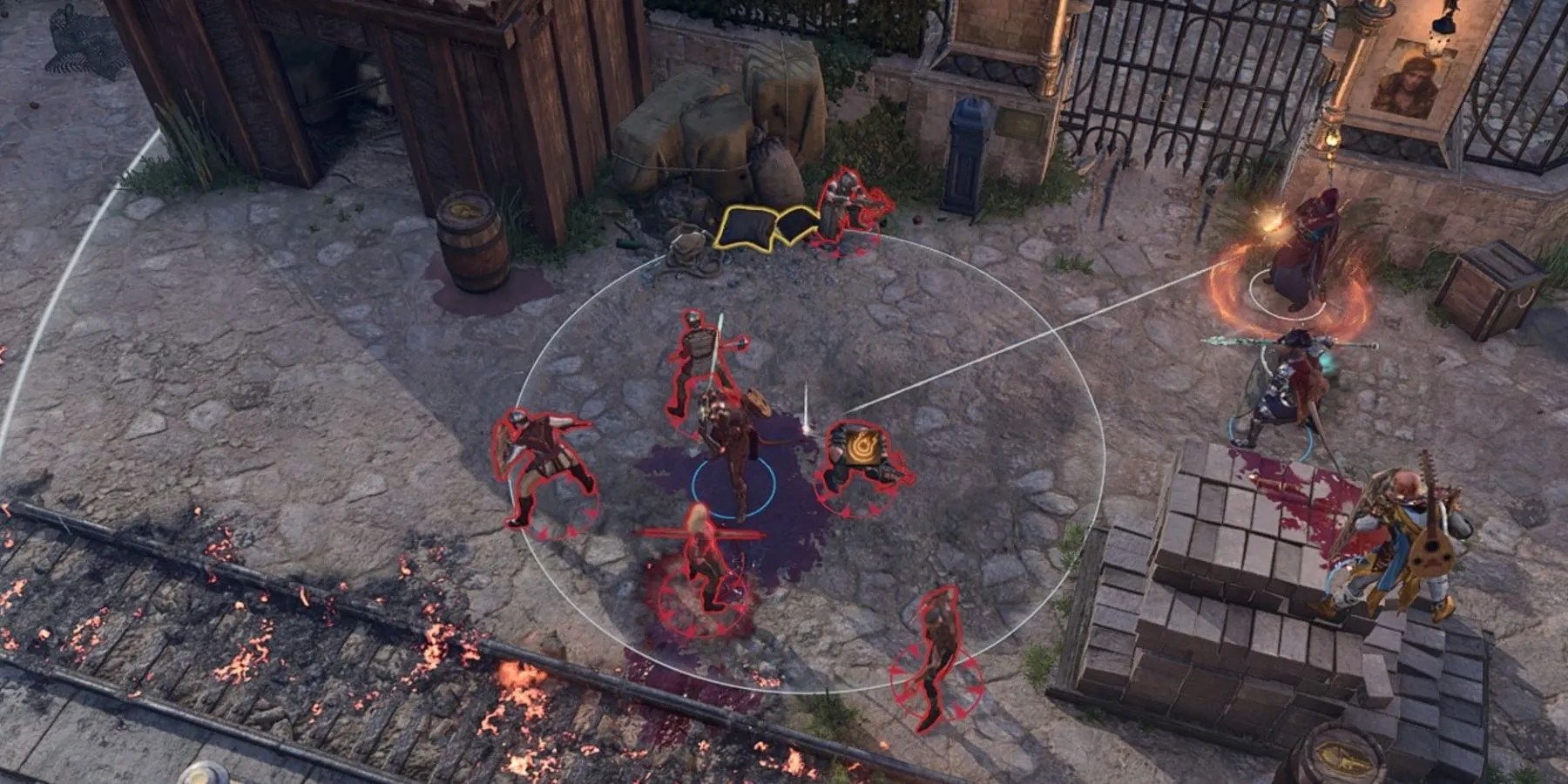
Players thought this track couldn’t be found withinBaldur’s Gate 3and that it was likely a cut tune that was packaged as a bonus song alongside the official soundtrack’s release, but some lucky people discovered that it very much did exist within the game all along.
Upon completingthe second act of the game, players can walk to a particular ledge near a campsite at Wyrm’s Lookout while looking at Baldur’s Gate itself. The track is ‘I Want to Live,’ which is heard throughout the game in an instrumental form, but here it actually has vocals sewn into it.

Players who would use level warp cheats inRise of the Triad: Dark Warwould end up hearing a short, silly polka tune played on a loop aloud. This is the ‘Fish Polka,’ composed by Lee Jackson. The composer’s intention was to let everyone in the room know that the player was cheating if they heard this quirky tune.
As for the “fish” in the title? It’s a reference to the Dopefish, ‘the second-dumbest creature in the universe.’ First appearing inCommander Keen 4: Goodbye Galaxy, he would reappear in numerous video games as an Easter egg ever since. A stupid little fish needs a goofy song to go alongside, after all.

‘Tokata’s Song’ would go on to be one of the most famous secret songs in Nintendo’s history of video games. Its first ever instance would be in aJapanese-exclusive title for the Game BoycalledX, but it would really become famous when it was discovered inMario Paint, which was released globally.
On the title screen, clicking on the letters that spell out the game’s title will result in different effects occurring. If a player was to click on the ‘O,’ it would turn into a bomb and blow up, and the simplistic melody would play after that. Many different Nintendo games have been documented as having the song present in various forms.
MORE:Best Music Themes From The Original Super Mario Bros. Game, Ranked
