TheDragon Agegames so far have usually focused on two conflicts each — one existential, and one that’s more down to earth. InDragon Age: Originsit was the Darkspawn horde and the political strife within Ferelden. InInquisition, the fight against Corypheus took place over the backdrop of the war between the Mages and the Templars.Dragon Age 4’s existential threat will be the Dread Wolf, who plans to bring down the Veil between Thedas and the Fade. If it has a more grounded menace, however, it has yet to be revealed.
It seems very likely thatDragon Age 4will follow both the Dread Wolf plotline and a renewed war between the human kingdoms of Thedas and the Qunari of Par Vollen. Tensions with the Qunari have escalated over the games so far, butDragon Age: Inquisitionand lore from BioWare make it seem very likely that the stalemate between the Qunari and both the southern and northern nations of Thedas is all but over.
RELATED:Dragon Age 4: The First Blight Could Be More Important Than Ever
Dragon Age: The History Of The Qunari Wars
Where exactly the Qunari came from has yet to be revealed in theDragon Agegames. There have been a few hints that their gray skin and horns come from dragon blood, and a precursor race known asthe Kossithhave come up several times in the lore. What is known for certain, however, is that the Qunari arrived from an unknown land to the north, conquering the Tevinter island of Par Vollen in 6:30 Steel.
By 6:42 Steel, the Qunari had conquered most of the Tevinter Imperium, as well as the neighboring kingdoms of Rivain and Antiva. By the final few decades ofthe Steel Age, many of these conquered lands had risen up against their occupiers, and by 7:23 Storm, the Qunari were on the fighting off continent-wide rebellions from their more secure positions in Rivain and on the island of Seheron.

By the end ofthe Storm Agethe Imperial Chantry and the Andrastian Chantry had put aside their differences to lead a combined Exalted March against the Qunari. After decades of conflict, the envoys of the human nations of Thedas and the Qunari met in Llomerryn, signing a peace agreement known as the Llomerryn Accord. Tevinter was the only nation not to sign this treaty, as the accord formally handed Par Vollen over to the Qunari. Tevinter and Par Vollen have maintained hostile relations ever since, although their conflict has not broken out into another major war since the other human nations signed the peace deal.
The Dragon’s Breath Conspiracy
Although it has been years since the Qunari were pushed back from mainland Thedas, the events ofDragon Age: Inquisitionsuggest a renewed conflict is on the horizon. InDragon Age: Inquisition’s Trespasser DLC it is revealed that the Qunari were attempting to use the Eluvians to assassinate much of Southern Thedas' nobility, hoping to take over the south of the continent. The Inquisition and the Dread Wolf’s agents stopped this plot — known as the Dragon’s Breath conspiracy. However, the discovery of this plan in 9:44 Dragon makes the southern nations backing out of the Llomerryn Accord seem very likely in the next game.
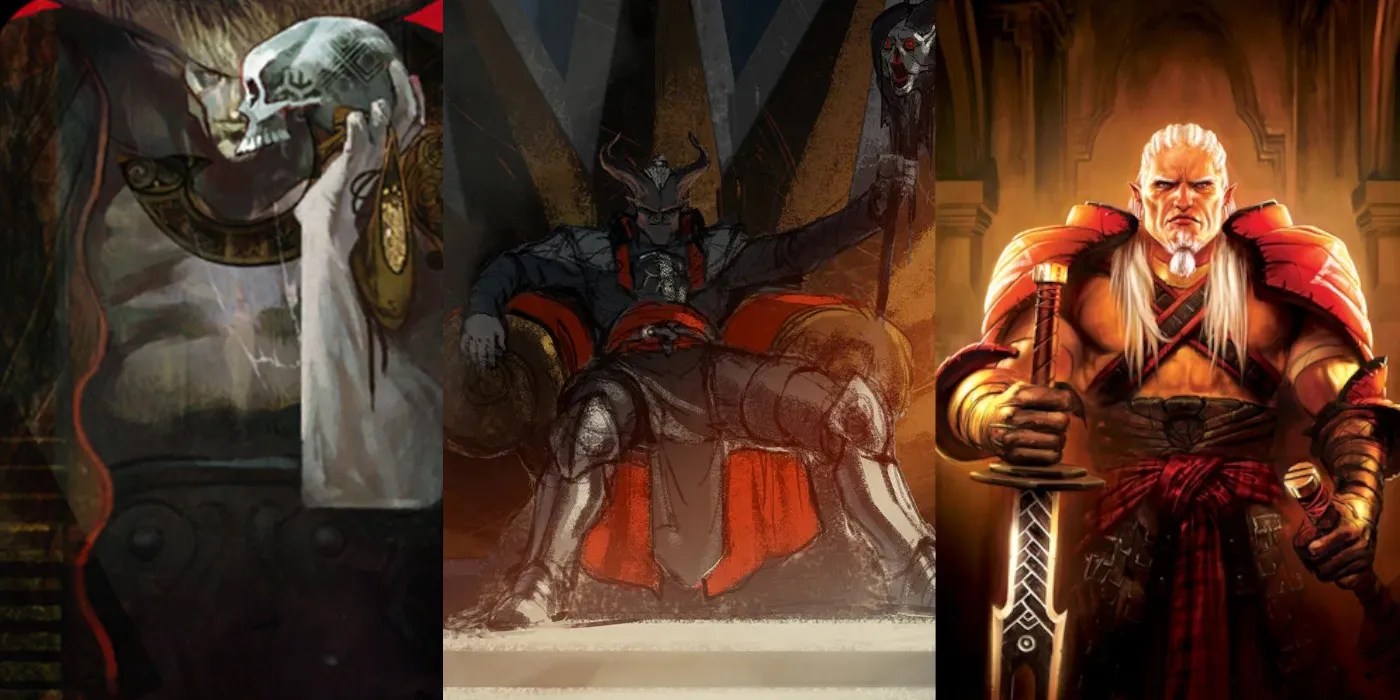
Dragon’s Breath also has some interesting implications for a future conflict with the Qunari. By the time of Trespasser,Sten, the companion fromDragon Age: Origins, is the Arishok of the Qunari, their military leader. Despite being an ally inOrigins, it seems that the Qunari have once again focused their ambitions on taking over Thedas under Sten’s leadership. The DLC also pits two ofDragon Age 4’s major threats — the Dread Wolf and the Qunari — against one another. It seems possible that players will have the opportunity to use the Qunari forces against the Dread Wolf in the next game, or vice versa.

The failure of the Dragon’s Breath conspiracy is mentioned to likely lead to a renewed and focused effort by the Qunari to take over Tevinter again, with their plans to take Thedas from the south having failed. Escaping a Qunari attack also seems like one of the more likely openings toDragon Age 4if the player starts inthe Tevinter Imperium.
RELATED:Dragon Age 4: Everything We Know About the Game’s Tevinter Setting
The Ventus Incident
In 9:44 Dragon, the same year as Trespasser, rumors began circulating that the Qunari were planning to take the city of Ventus. Ventus is animportant city in the Tevinter Imperium, strategically placed near the island of Serheon. The city was originally named Qarinus, after the human tribe that settled the area. It was later integrated into the Imperium, before falling to the Qunari during the Qunari Wars. When Tevinter retook the city it was named Ventus.
At some point in 9:44 Dragon, the Qunari successfully captured Ventus. Although the war with Tevinter never ended, the Qunari attack on Ventus was one of their most aggressive acts since their arrival on the continent. InDragon Age: Tevinter Nights, the fate of Ventus is revealed to be particularly grim, and very likely to spark outrage in a mage-dominated society like the Tevinter Imperium.
Although the Qunari successfully took the city, they did not bring manyBen-Harssrathwith them to occupy it. The Ben-Hassrath are a portion of the Qunari priesthood focused largely on espionage, but its members are also tasked with administering Qamek to any mages the Qunari come across in the lands they conquer.
Qamek is a poison which turns its victims into mindless laborers, similar to being made Tranquil bythe Circle of Magi. It is particularly painful to ingest, and although victims can sometimes overcome small doses, larger doses cause permanent damage. Without the Ben-Hassrath to measure doses, the Qunari administered huge doses of Qamek to all of the mages in the city of Ventus.
The kingdoms of southern and northern Thedas have good reason to unite against the Qunari once again. The Qunari seem to be becoming increasingly ambitious, and their crimes particularly heinous. Althoughthe Dread Wolfplotline has dominated the marketing forDragon Age 4so far, it seems very likely that the game will also feature a war with the Qunari, revealing more about their ultimate goals and perhaps even their mysterious origins.
